
THE GIST
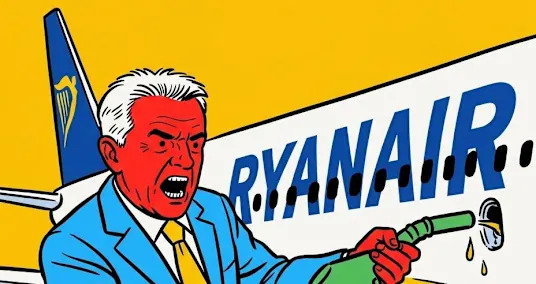
Europe's biggest airline is sounding the alarm. If jet fuel supplies tighten this summer, Ryanair says it may have to cancel flights. What looks like a commodity story is quickly turning into a capacity story, with knock-on effects for fares, tourism, and airline profits.
WHAT HAPPENED
Michael O'Leary, Ryanair's famously unfiltered CEO, has delivered the kind of blunt warning he tends to specialize in. If fuel supply risks materialize in June, July, or August, airlines will have to start cutting flights.
This is not hypothetical.
The war involving Iran has disrupted one of the most critical arteries in global energy markets: the Strait of Hormuz. Roughly a fifth of the world's oil normally flows through that corridor. With supply routes under pressure, jet fuel markets have tightened sharply.
Prices have surged. Jet fuel recently traded around $195 per barrel, more than double last year's levels, reflecting both supply disruption and the kind of panic buying that tends to make supply disruptions worse. Oil itself has been volatile, with Brent briefly pushing above $100 before pulling back on hopes of a shorter conflict.
But for airlines, price is only half the story.
Ryanair has hedged about 80% of its fuel needs through March next year at roughly $67 per barrel. That gives it a buffer against rising costs in the short term. Many competitors are less protected, leaving margins exposed.
The bigger concern is physical availability.
Speaking to Sky News, O'Leary flagged that up to 10% to 20% of jet fuel supply could be at risk this summer if the conflict drags on. That is not a marginal squeeze. That is enough to force airlines to ground aircraft or reduce schedules. He also noted that assurances from fuel suppliers only stretch to late May, and beyond that, no one is willing to commit to anything.
The UK is particularly exposed. As O'Leary told the Guardian, it relies on Kuwait for roughly a quarter of its jet fuel imports, making it more vulnerable than other European markets if Middle Eastern flows are disrupted.
So far, airlines have not made large-scale cancellations. Demand remains strong, and Ryanair still expects passenger traffic to grow about 5% in the April to June period, with fares rising modestly by 3% to 4%.
But the tone is shifting.
WHY IT MATTERS
Our analysts just identified a stock with the potential to be the next Nvidia. Tell us how you invest and we'll show you why it's our #1 pick. Tap here.
This is where the story moves from headline risk to structural stress.
LATEST POSTS
- 1
 Figure out How to Consolidate Cutting edge innovations in Senior's SUVs
 - 2Hundreds of Gazans evacuated from Strip for medical treatment - COGAT
- 3Extraordinary Shows to Long distance race on a Plane
- 4the Wild in Style: The Reduced Portage Mustang's Bold Heritage
- 5Artemis II astronauts arrive at Florida launch site for first moon trip in 53 years



- Solar storms can trigger auroras on Earth. This star’s explosion could destroy a planet’s atmosphere
- Key Caper d: A Survey of \Procedure and Tomfoolery Released\ Tabletop game
- How to watch 'A Charlie Brown Christmas' for free in 2025
- Newly discovered link between traumatic brain injury in children and epigenetic changes could help personalize treatment for recovering kids
- The most effective method to Look at Medical caretaker Compensations Across Various Clinics
- Nikki Glaser returns as host of the 2026 Golden Globes: Everything the comedian has said about the upcoming awards show
- 2 of Earth's rarest lightning phenomena captured simultaneously in once-in-a-lifetime photo
- The most effective method to Pick the Right Volvo XC40 Trim for Your Way of life
- Full SNAP benefits must be paid ‘promptly,’ USDA tells states as government reopens


